
Tree Pruning & Trimming · Cullman, AL
Pruned with
a plan.
Crown thinning, deadwood removal, and clearance pruning — the careful kind of trimming.
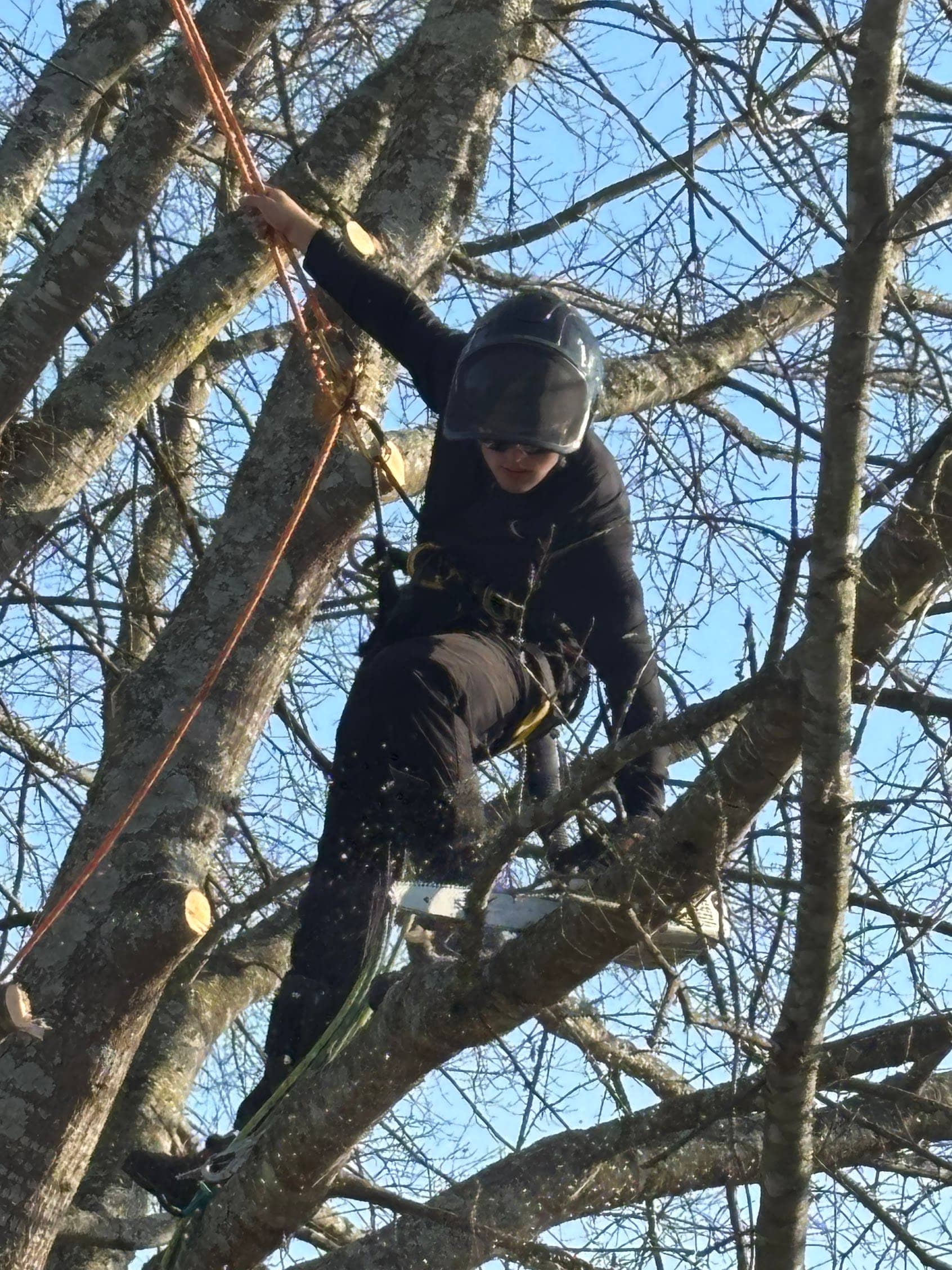 In the canopy
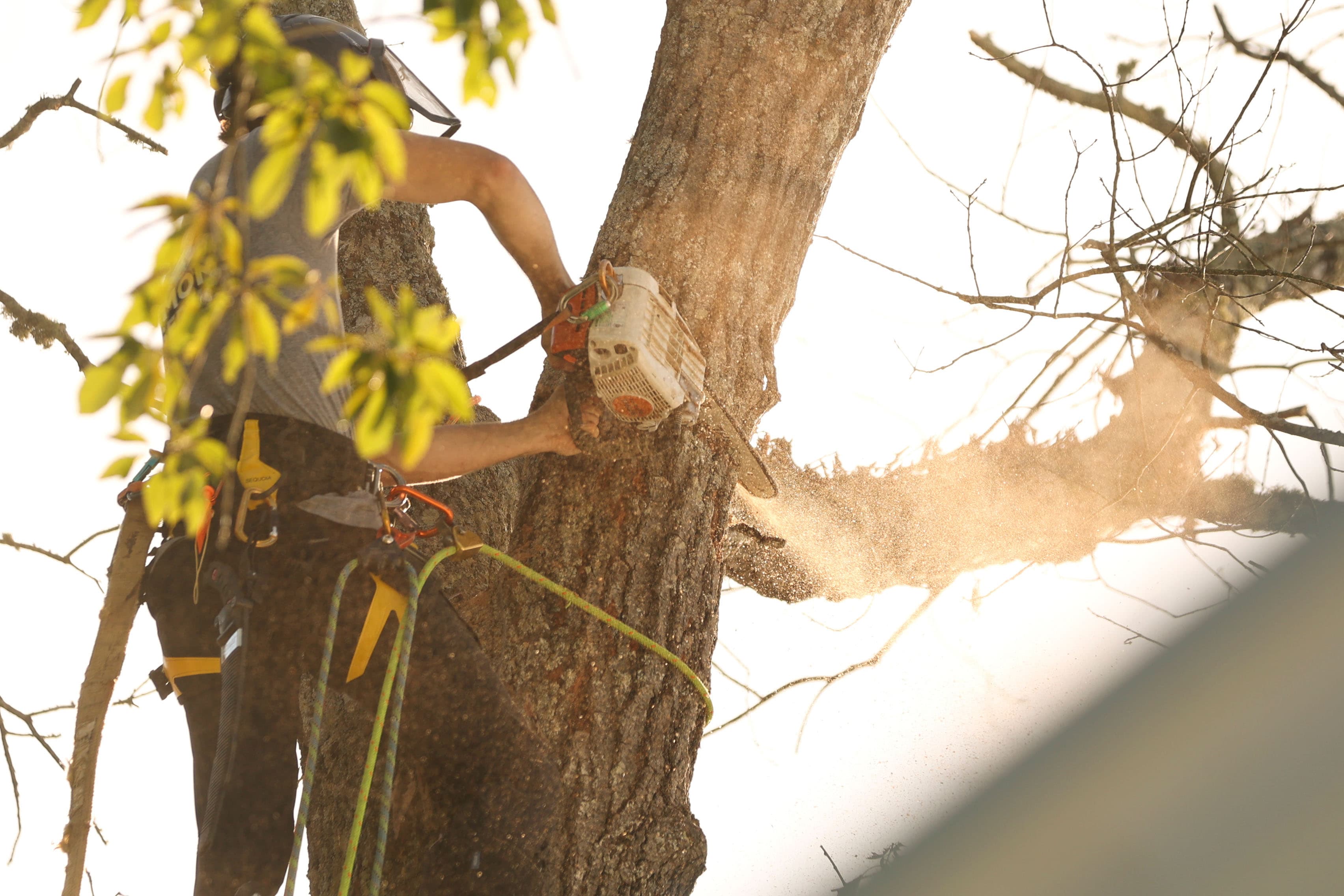
 Up the rope
The four pruning cuts
Cleaning, thinning,
raising, reducing.
Most pruning jobs use one or two of these in combination. Tap through to see when each one's the right move.
Whenever you can see deadwood from the ground
Targeted removal of dead, dying, diseased, broken, and weakly-attached branches. The most defensible pruning a healthy mature tree gets — no live wood touched unless it has to be.
- 01Removes risk without stressing the tree
- 02Can be done year-round on most species
- 03First step on any older tree we haven't worked before
- 04Lowest cost for the biggest safety win
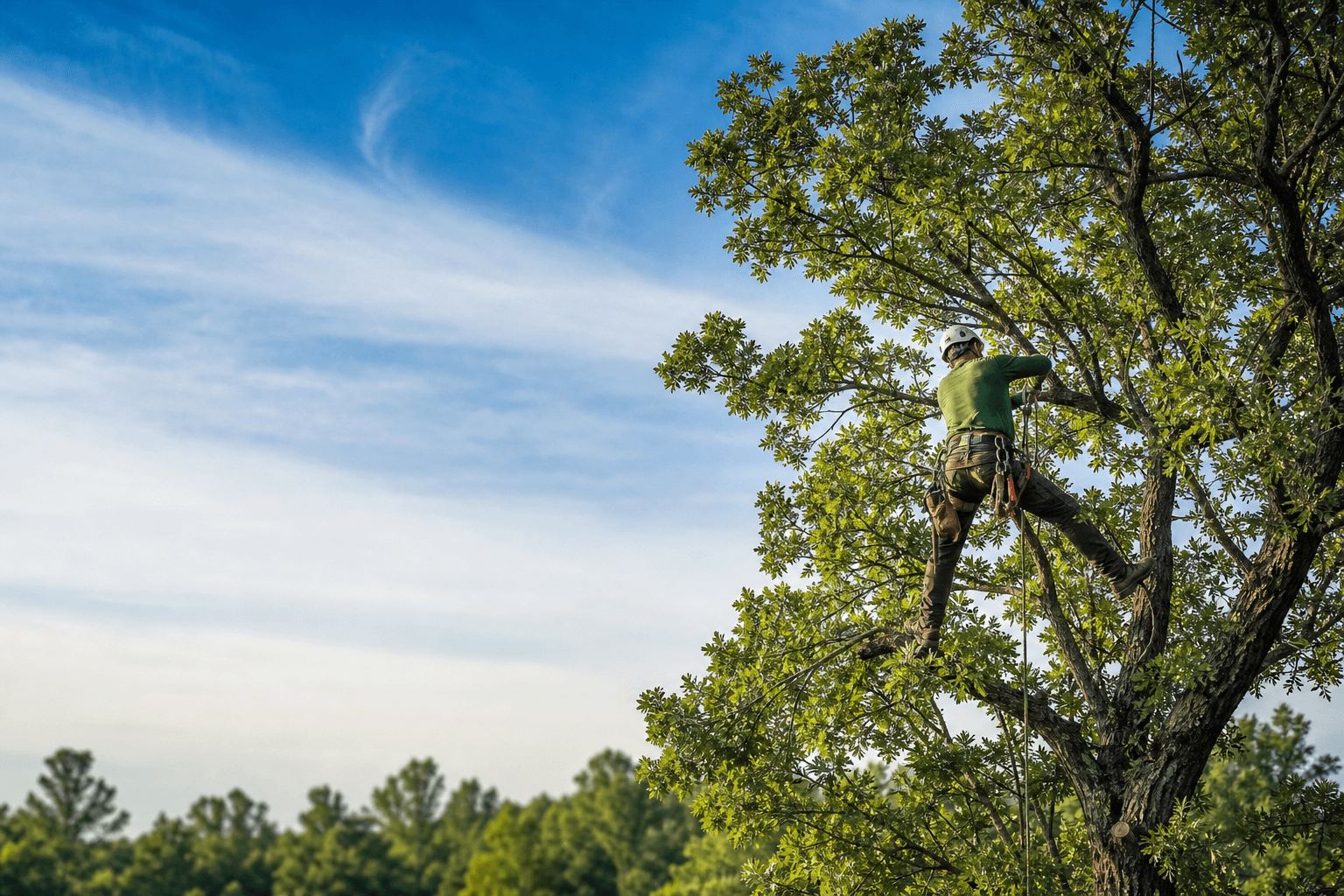
When wind catches the canopy or light gets blocked underneath
Selective removal of live branches to reduce density and let wind and light pass through. Done sparingly — never more than 10–15% of live wood at a time — and always from the outer canopy.
- 01Lets wind move through instead of pushing on it
- 02Reduces shading on lawns and gardens below
- 03Lightens the load on overextended limbs
- 04Easy to overdo — we cut conservatively
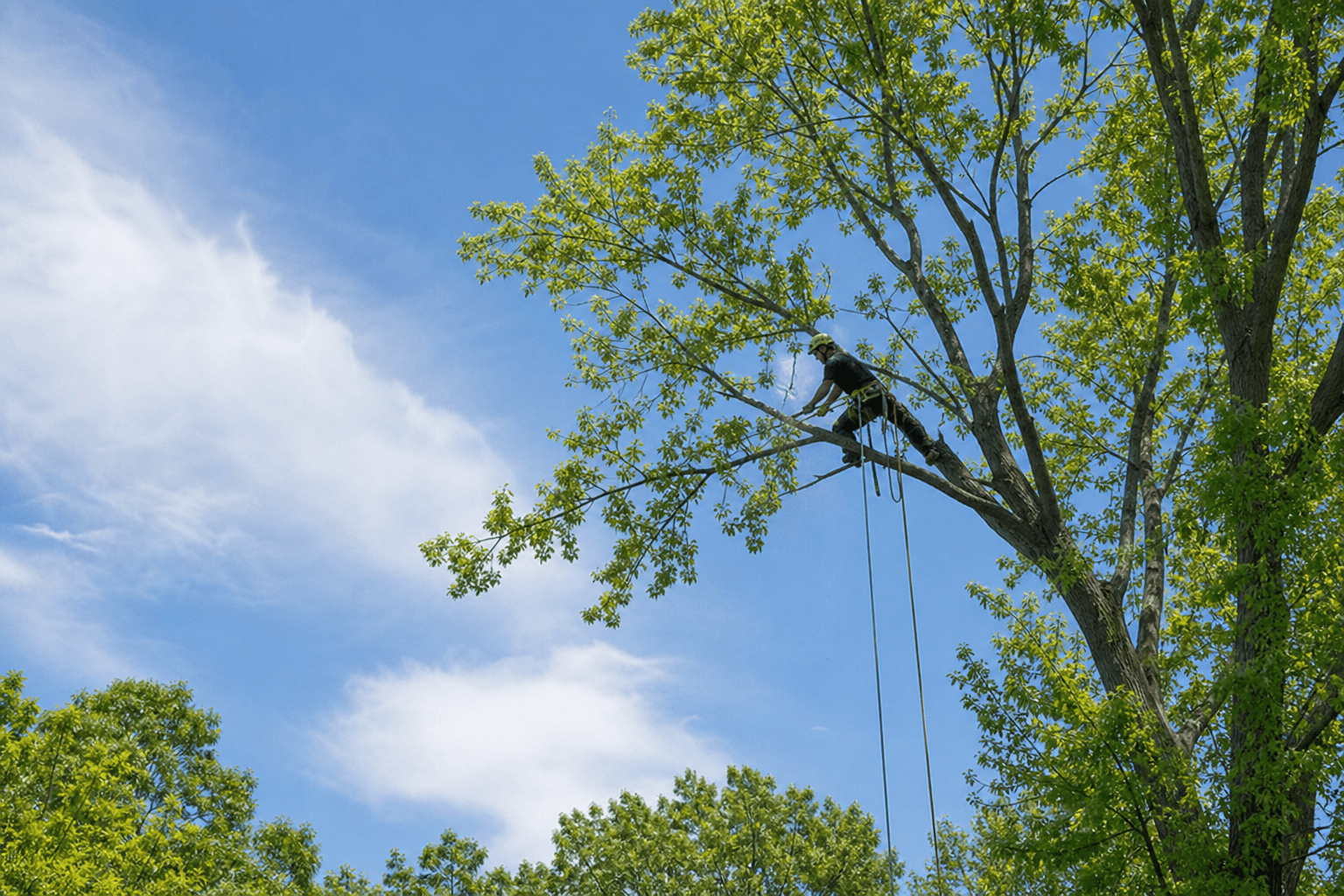
To clear a roofline, driveway, sidewalk, or sightline
Lower branches removed to lift the bottom of the canopy. Common over driveways, sidewalks, fences, and rooflines — the most-requested pruning we do on suburban trees.
- 01Clearance over a roof, driveway, or walkway
- 02Visibility for traffic at a corner or driveway exit
- 03Limited to one-third of the total tree height
- 04Done in stages on young trees over multiple years
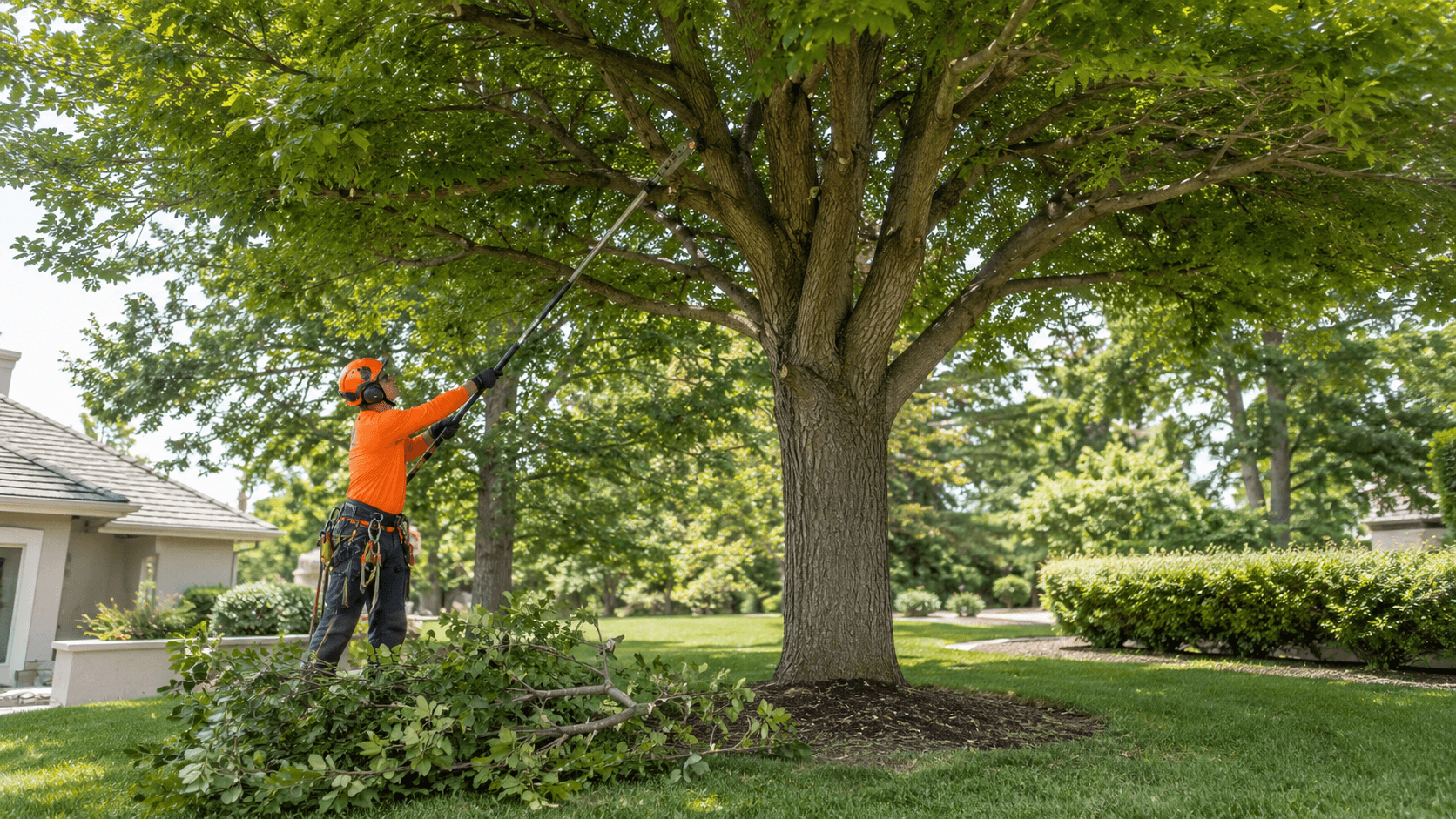
When clearance from a structure or service line is needed and removal isn't
Selective shortening of branches back to suitable lateral limbs — not topping. Reduces the spread or height of the canopy while preserving the tree's natural form.
- 01True reduction cuts to a lateral, never to a stub
- 02Preserves the tree's structural integrity
- 03An honest alternative to removal in some cases
- 04Not a fix for the wrong tree in the wrong place
When the cut
matters.
Some species are forgiving year-round, others have hard windows. Tap a row to see the rule we work to.
- Ideal window
- Acceptable
- Avoid
Dormant pruning (Jan–Mar, Nov–Dec) gives the cleanest healing and the clearest read on structure with leaves off.
The standard we work to
Pruning isn't
just cutting.
ANSI A300 is the standard for pruning practice. We work to it on every job — and we don't take the shortcuts that show up in a tree five years later.
What we won't do
No topping
Cutting big leaders to stubs invites decay and forces weak sucker growth that breaks in a few years.
No flush cuts
Cutting into the branch collar kills the tree's natural healing. We always leave the collar intact.
No stripping
Removing more than 25% of live canopy in a season stresses a mature tree, sometimes for years.
How we cut
ANSI A300 cuts
Every cut to the standard — at the collar, sized to the limb, no tear-outs on the way down.
Climb, don't spike
No climbing spikes on live trees. Spurs are for removals and rescues only — they wound healthy wood.
Document and explain
We show you what we cut and why. You leave the job understanding the tree better than you did before.
Common questions
Pruning
questions.
Timing, technique, and what to expect after the cut.
01When's the best time to prune?
Most hardwoods do best when pruned during dormancy — late winter into early spring before bud break. Light cleanup pruning can be done year-round on healthy trees. Oaks have specific timing windows because of oak wilt — we work around that.02Will pruning hurt the tree?
Done right, no — proper cuts at the branch collar heal cleanly. Done wrong (topping, flush cuts, over-thinning), pruning can stress a tree for years. We don't top trees and we don't strip them.03How much should you take off?
On a mature healthy tree, generally no more than ~25% of the live canopy in a single season. Less on stressed or older trees. The goal is targeted — deadwood, structural problems, clearance — not volume.04Can you raise the canopy off my house or driveway?
Yes. Crown raising for clearance over a roof, driveway, walkway, or fence is one of the most common pruning jobs we do.
Ready when you are
Let's get the work
scheduled.
Call for the fastest response — usually answered live, often same-day visits.