
After a tree comes down, what's left is a stump and a halo of surface roots. Stump grinding is the cleanest way to get that out of the yard — not because it's the most thorough method (it isn't), but because it's the right balance of cost, time, and lawn impact. Here's what actually happens on the day.
What stump grinding is
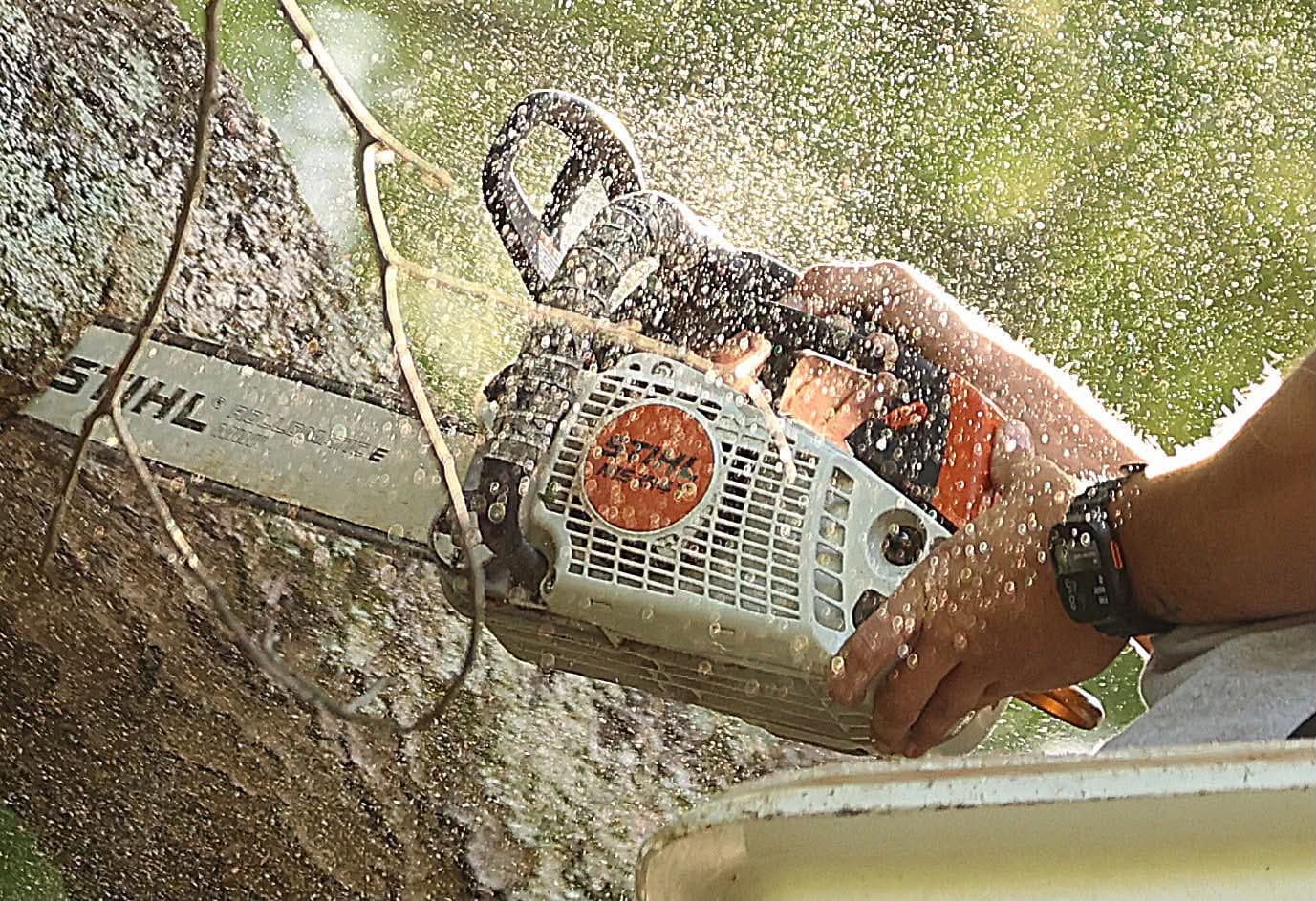
A stump grinder is a machine with a rotating carbide-tipped wheel. We position it over the stump, work the wheel back and forth across the wood, and shred the stump and visible flare into chips a few inches below grade. The chip pile that's left in the hole can be raked into a mulch bed, hauled off, or topped with soil and seeded.
Worth being clear: grinding is not full root excavation. We remove the visible stump and the surface flare. The lateral root system stays in the soil and decomposes over time. For 95% of residential jobs that's exactly what you want — replanting, sodding, putting in a flower bed, paving over it.
How deep we go
- Standard depth:4 to 6 inches below grade. Good for lawn restoration, reseeding, or just having the yard whole again.
- Replant depth:8 to 12 inches if you're planting a new tree close by, or extending a flower bed over the area.
- Pour depth:Deeper still if you're pouring concrete, putting in a paver pad, or building a shed on top — we'll grind to whatever the project actually needs.
What changes the price
Stump grinding is usually quoted by the diameter of the cut, with a few variables stacked on top:
- Diameter.The single biggest driver. More inches across, more grinding, more time.
- Surface roots.Visible roots radiating out from the stump add grinding time — especially on older hardwoods.
- Access.Whether the machine fits through your gate. Some fenced backyards need a smaller grinder.
- Hardwood vs softwood.Oak and hickory grind slower than pine and cedar. The price reflects the time.
- Number of stumps.Multiple stumps on one yard get a combined price — setup cost only happens once.
- Cleanup choice.Leave the chips as mulch (cheapest), pile and reseed (middle), or haul the chips off (most).
After the grinder leaves
What you'll see is a chip-filled depression where the stump used to be. The chips will settle over the next few days. From there you have a few honest options:
- Leave as mulch.Top with a couple inches of soil if you want it level, or use the chip volume as a mulch bed.
- Reseed the spot.Remove some of the chip material, top with 2–4 inches of quality topsoil, then seed or sod. The grass takes a season to fully knit back in.
- Replant a new tree.Plant a few feet off-center from the old stump location — the lateral root system underneath will keep decomposing and create soft spots over time.
“An afternoon of grinding gives you back a patch of yard you've been mowing around for years. It's some of the best square footage you'll reclaim per dollar.”
— Trenton Clemmons, Clemmons Tree Service
When to call
If you've got a stump left from a tree we took down — or one somebody else took down and left for you — call. Same with fence-line clearings, stumps growing sucker shoots, or stumps in the way of a shed, driveway expansion, or pour. We'll bring the right machine for your access and grind to whatever depth your project actually needs.
Free estimates anywhere in Cullman or the surrounding county — call (256) 595-0939.
Trenton Clemmons, Owner